Benefits, checked
SonoVive Benefits: What the Bottle Says It Supports
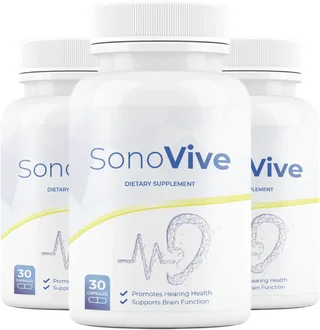
The SonoVive bottle says it promotes hearing health and supports brain function.
Of its five named ingredients, bacopa showed a modest memory effect at about 300 mg a day for 12 weeks in studies (Pase 2012 bacopa review), and ginkgo has been studied for ringing in the ears (Cochrane: Ginkgo for tinnitus 2022).
See all five ingredients.
Written by the SonoVive editorial teamUpdated
The promises
What benefits does SonoVive claim?
Two on the bottle and a few more on the sales page. None mentions tinnitus, hearing loss or memory loss by name.
| Claim | Where it appears | Type of claim |
|---|---|---|
| Promotes Hearing Health | Bottle front | Structure/function wording |
| Supports Brain Function | Bottle front | Structure/function wording |
| Support the health of your ears with 100% natural ingredients | Sales page | Marketing wording |
| Made in the USA in an FDA approved and GMP certified facility | Sales page | Quality wording |
| No dangerous stimulants or toxins | Sales page | Safety wording |
The careful wording is a point in SonoVive's favor. Structure/function claims, paired with the FDA statement, are what the rules allow for a supplement (21 CFR 101.93). Many sponsored articles go further and sell it for tinnitus. Those are their words, not the bottle's.
Claim by claim
Do SonoVive's claims hold up?
Each panel shows one claim from the brand, then what the linked evidence says.
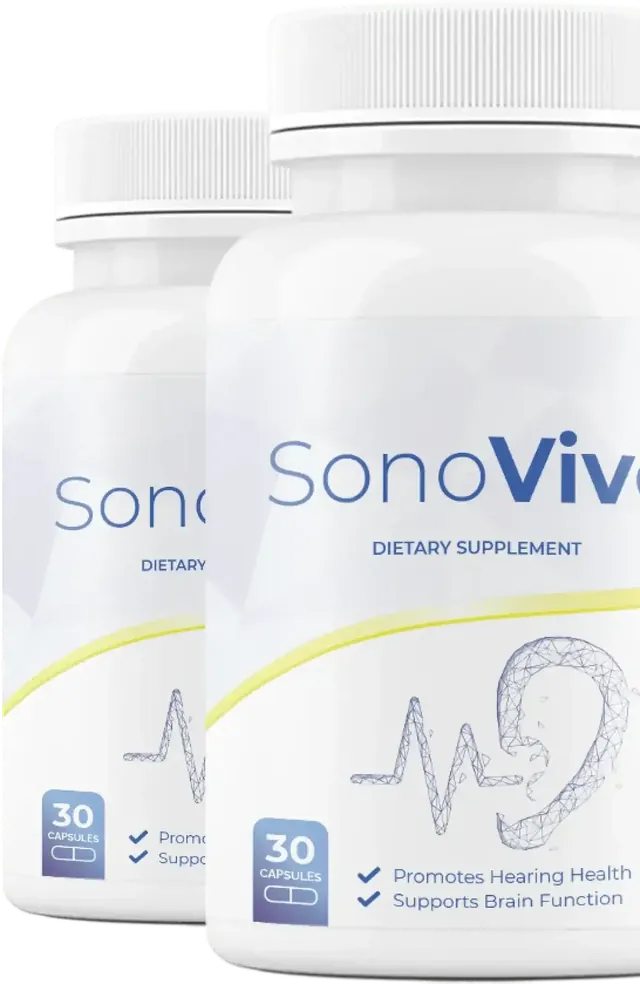 Sales-page claim
What the evidence saysNone of the five named ingredients has good evidence for hearing. NIDCD says no supplement has been proven to help tinnitus. (NIDCD tinnitus)
Read more Sales-page claim
What the evidence saysGinkgo did not prevent dementia in 3,069 adults over 75 followed for about 6 years. (GEM trial (DeKosky 2008))
Read more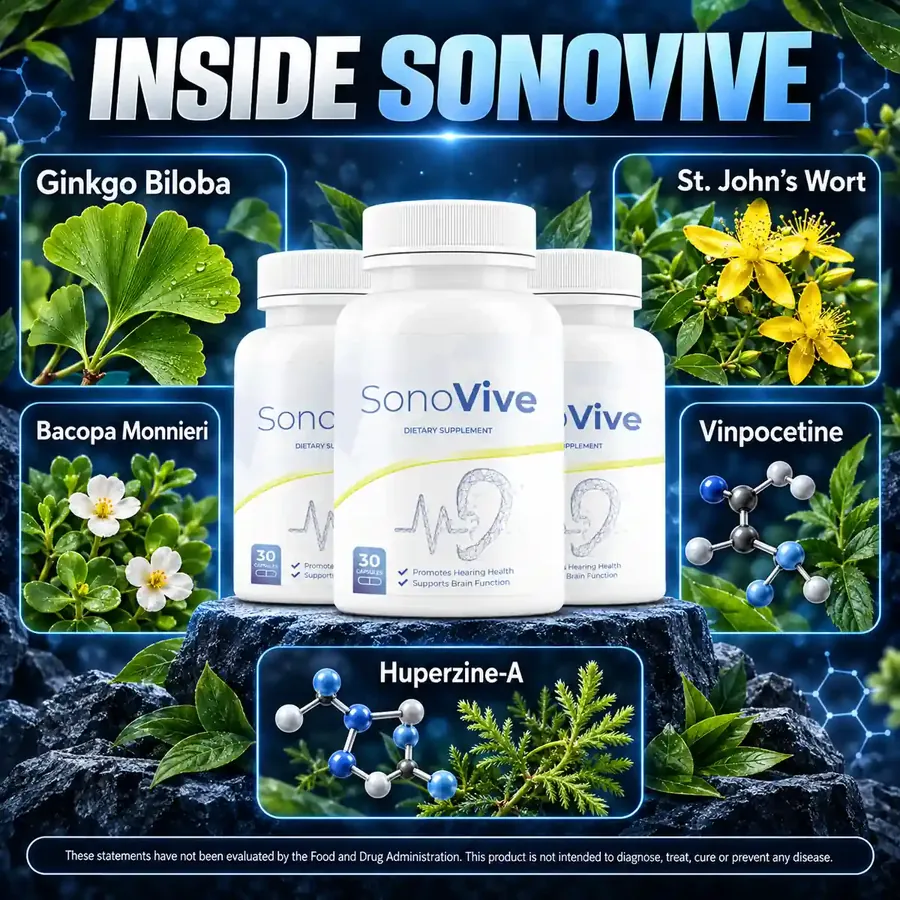 Sales-page claim
What the evidence saysFDA says vinpocetine does not meet the definition of a dietary ingredient; it was first developed as a drug. (FDA vinpocetine)
Read more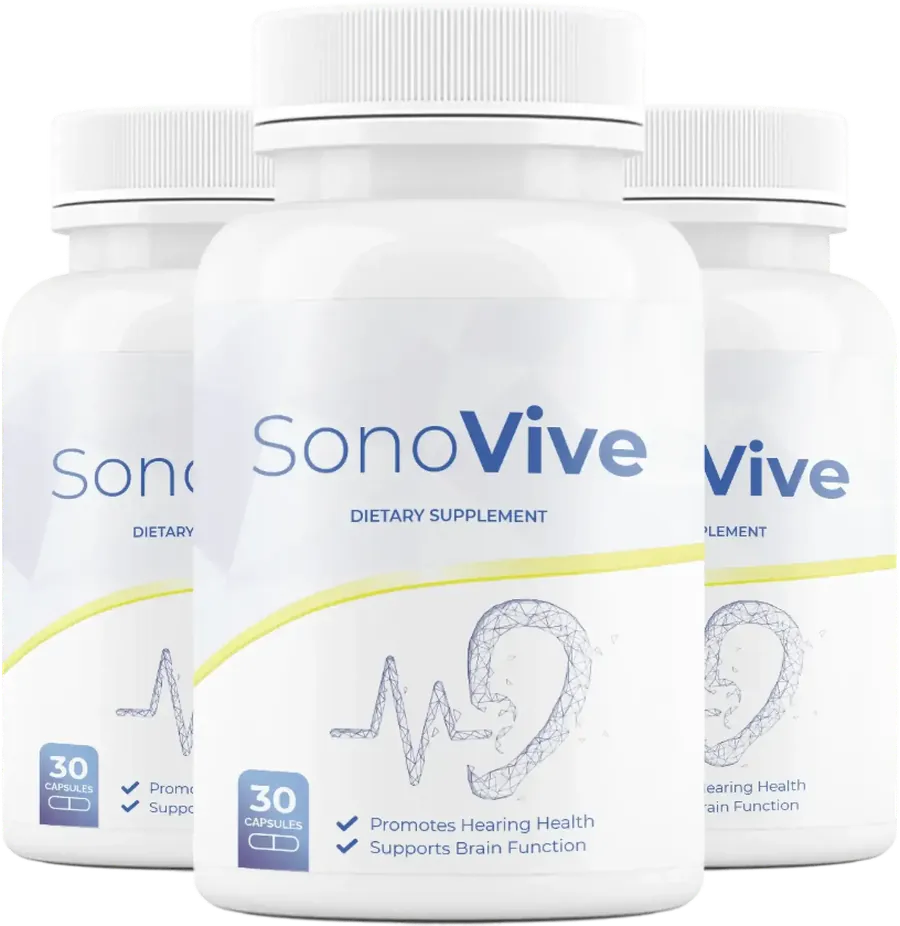 Sales-page claim
What the evidence saysFDA does not approve supplements, and a facility registration number is not approval. (21 CFR 1.242)
Read moreThe panels use the brand's own photos. A picture of a bottle is not proof of what is inside it.
Hearing
Does SonoVive improve hearing?
There is no evidence that it does. Not one of the five named ingredients has good evidence for hearing, and SonoVive itself was never tested.
About one in three Americans aged 65 to 74 has it (NIDCD age-related hearing loss). Hearing aids, including over-the-counter models for adults with mild to moderate loss, are the proven help (FDA OTC hearing aids).
Take a 64-year-old who keeps asking her grandkids to repeat themselves at dinner. A capsule will not tell her how much hearing she has lost. A hearing test will. Compare both options on our SonoVive vs hearing aids page.
Brain and memory
Does SonoVive support memory or focus?
The brain claim has a little more behind it than the hearing claim, but only at study doses.
Bacopa
Six trials at 300-450 mg a day for 12 weeks improved 9 of 17 memory recall tests (Pase 2012 bacopa review). Nine studies with 518 people found slightly faster attention (Kongkeaw 2014 bacopa meta-analysis). The reported SonoVive amount is 120 mg.
Huperzine A
Twenty Alzheimer's trials with 1,823 people used 200-800 mcg a day. Scores rose, but study quality was poor (Yang 2013 huperzine meta-analysis). The reported SonoVive amount is 10 mcg.
Ginkgo
The GEM trial gave 3,069 adults over 75 ginkgo or placebo for a median 6.1 years. Dementia rates did not differ (GEM trial (DeKosky 2008)).
Vinpocetine
A Cochrane review of 3 studies and 583 people with dementia called the evidence inconclusive (Cochrane vinpocetine).
St. John's wort sits outside this list. It was studied for depression, where 35 trials found it better than placebo for mild to moderate cases, with a call for caution (Apaydin 2016 SJW review). Mood is not hearing, and it is not memory.
By the numbers
What do the key numbers say about SonoVive benefits?
Check your medicines, then decide30 capsules a bottle · $69 for one bottle · 60-day refund window
Order nowFair is fair
What does SonoVive get right?
Points in its favor
- The bottle avoids disease claims and prints the FDA statement
- Every named ingredient has a long research record you can read
- No subscription terms found; one bottle is a one-time $69
- The refund page accepts opened and empty bottles
Points against it
- No amounts, so no way to compare with study doses
- Reported amounts sit far below research levels
- St. John's wort brings a long list of drug interactions (NCCIH St. John's wort)
- Vinpocetine is off limits in pregnancy, per FDA (FDA vinpocetine)
Sales-page wording
Which SonoVive sales claims are misleading?
Four lines stand out. Each one is stated here plainly, with the rule it runs into.
- The sales page's 100% natural line. FDA says vinpocetine does not meet the definition of a dietary ingredient; it was first made as a drug (FDA vinpocetine) (MSKCC vinpocetine).
- FDA wording. SonoVive is not FDA approved, and neither is any facility. FDA does not approve supplements before sale (FDA supplement Q&A), and a registration number is not approval (21 CFR 1.242).
- Testimonials. The vendor's own disclaimer says some were recorded with paid actors. FTC rules require that to be made clear (FTC Endorsement Guides).
- Made in USA. An unqualified claim must be all or virtually all made here (FTC Made in USA). No maker or facility is named to check it.

None of this proves the capsule is bad. It does mean the marketing deserves less trust than the ingredient studies. Our testing and quality page covers what a buyer can and cannot check.
Set your expectations
What benefit can you realistically expect from SonoVive?
Expect little for hearing, and plan as if nothing will change. If you notice a difference, it may come from better sleep, less noise or simple chance.
Write down three things before your first capsule: how loud the ringing feels from 1 to 10, how often you ask people to repeat themselves, and how you sleep. Check the same three each week. Decide by day 45, so the bottles can reach the return address inside the 60-day window.
Keep your hearing care going alongside. A supplement should never push back a hearing test or a doctor's visit.
FAQ
SonoVive benefits: questions people search
What are the benefits of SonoVive?
The bottle claims it promotes hearing health and supports brain function. No study of SonoVive confirms either. Among its named ingredients, bacopa has modest memory evidence at about 300 mg a day, and ginkgo's effect on tinnitus is uncertain. The real benefit, if any, is unknown.
Does SonoVive restore lost hearing?
No. Nothing in the evidence suggests it can bring back hearing, and the bottle does not claim that. Hearing aids and, for severe loss, cochlear implants are the proven treatments, according to NIDCD. A hearing test shows which one fits you.
Can SonoVive help with brain fog?
It is not known. No study tested SonoVive for focus or brain fog. Bacopa showed slightly faster attention in a review of 9 studies, but at doses around 300 mg a day, more than double the 120 mg that sponsored articles report per capsule. Unexplained brain fog deserves a doctor's visit.
Is SonoVive good for memory?
The evidence is thin. Bacopa and huperzine A have some memory data at research doses, while ginkgo did not stop dementia in a 6-year trial of 3,069 older adults. SonoVive publishes no amounts, and the reported ones are well below study levels.
Is everything in SonoVive natural, as the sales page says?
That sales-page wording does not hold up. FDA says vinpocetine does not meet the definition of a dietary ingredient, and it was first developed as a drug. Ginkgo, St. John's wort and bacopa come from plants; huperzine A comes from club moss.
Is SonoVive worth it for tinnitus?
For most people, a hearing test and sound therapy are a better first spend. NIDCD says no supplement has been shown to work for tinnitus. If you still want to try SonoVive, check your medicines first and decide inside the 60-day refund window.
Why do some websites say SonoVive stops ringing?
Many sponsored articles market it for tinnitus. Those are advertising claims by third parties, not the bottle's wording. A product that claims to treat a disease needs drug-level proof, and no trial of SonoVive has been published. Trust the bottle's wording over the ads.
Who wrote this
Written and reviewed by
Plain-language pages built from the bottle images, the vendor's sales and help pages and linked public health sources such as NIH, FDA and Cochrane.
Last updated . Read our editorial standards and how we check reviews. This website is run by Sonovives, a USA authorized SonoVive retailer, not by the manufacturer. We earn money when you buy through our order links.
Keep reading
More about SonoVive
How it works
What each of the five named ingredients does in the body, and why the capsule itself has never been tested.
Read moreReviews
Why there is no SonoVive star score here yet, how buyer reviews get checked, and how to read testimonials elsewhere.
Read more
Testing & quality
What each SonoVive badge really means, why no lab report is public, and what FDA does not check.
Read moreUSA Authorized SonoVive Retailer
Thinking about SonoVive?
Book a hearing test, check your medicines with a pharmacist, then pick a pack. Keep your order email: it is the key to any refund.
- Secure checkout
- 60-day money-back window
- Tracking in the order email