Comparison
SonoVive vs Hearing Aids: Which One Fits Your Hearing Problem?
They do different jobs. Hearing aids make sound louder and clearer, and they are the proven treatment for age-related hearing loss. SonoVive is a capsule supplement whose bottle says it promotes hearing health; no study of it exists, and NIDCD says no supplement is proven for tinnitus. Start with a hearing test. A supplement can sit beside care, never replace it.
Written by the SonoVive editorial teamUpdated
The plain answer
Is SonoVive better than hearing aids?
No, and it is not trying to be the same thing. A hearing aid is a medical device that amplifies sound. SonoVive is a dietary supplement that makes a general wellness claim.
If words blur in a busy restaurant, or the TV keeps creeping louder, the cause is usually damage inside the ear. A hearing aid works around that damage. No capsule has been shown to repair it (NIDCD age-related hearing loss).
That said, people compare the two for real reasons. Hearing aids feel like a big step. A bottle feels easy. Below, each one is weighed on the same points, with the strengths of both kept in.
Side by side
How do SonoVive and hearing aids compare, point by point?
| Point | SonoVive | Hearing aids |
|---|---|---|
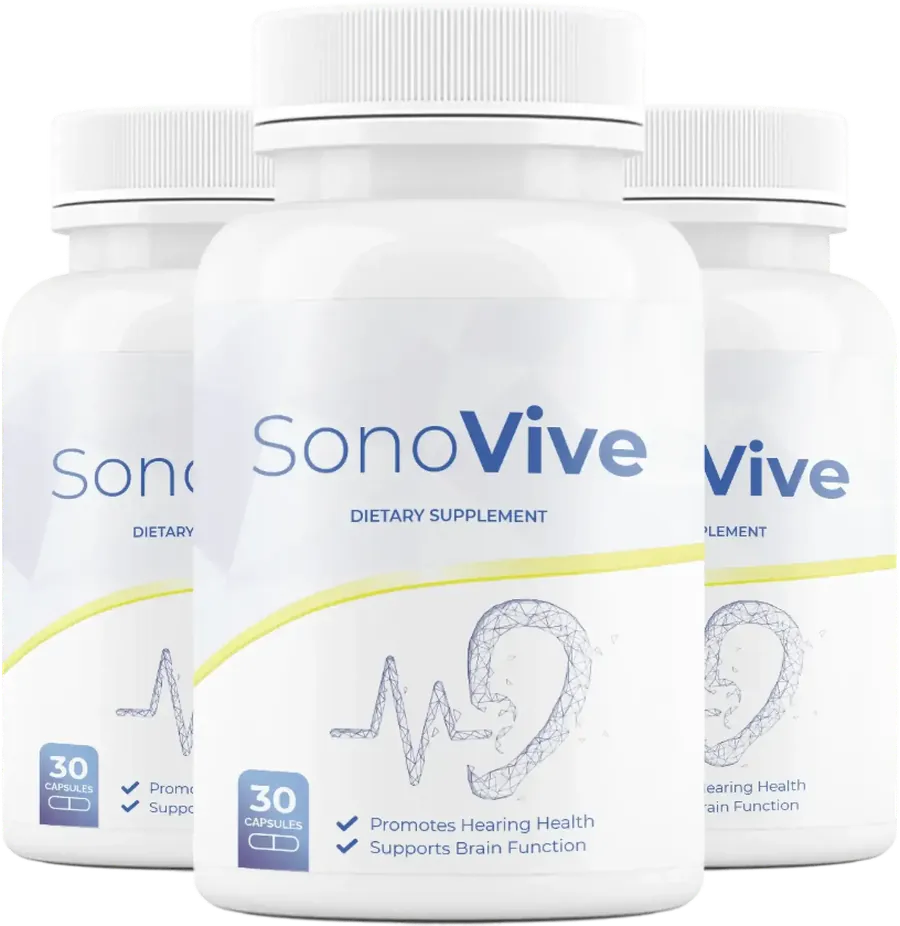
| What it is | Capsule dietary supplement, 30 per bottle | Wearable device that amplifies sound |
| How it is regulated | As a food; FDA does not approve it before sale (FDA supplement Q&A) | As a medical device by FDA (FDA OTC hearing aids) |
| What it claims | "Promotes Hearing Health", "Supports Brain Function" | Helps you hear better |
| Evidence for hearing loss | No study of SonoVive; none of its ingredients has good evidence for hearing | The standard treatment for age-related loss (NIDCD age-related hearing loss) |
| Evidence for tinnitus | Ginkgo: uncertain benefit in 12 studies (Cochrane: Ginkgo for tinnitus 2022) | Listed by NIDCD among the helps for ringing (NIDCD tinnitus) |
| Who can buy it | Adults 18+ (owner's brief) | Over the counter: adults 18+ with perceived mild to moderate loss; prescription aids for more (FDA OTC hearing aids) |
| Hearing test needed? | No | Not for OTC aids, but one is wise |
| Upfront cost | $69 for one bottle; larger packs priced at checkout | Varies widely by type and model |
| Ongoing cost | About $2.30 a day while you take it | Batteries or charging, upkeep |
| How soon you can tell | Unknown; the refund page suggests 3 months, longer than its window | You hear the difference while wearing them |
| Main safety concern | St. John's wort drug interactions (NCCIH St. John's wort); vinpocetine in pregnancy (FDA vinpocetine) | Fit, comfort, ear irritation |
| Drug interactions | Yes, many | None |
| Return policy | 60 days, all bottles back, you pay postage | Varies by seller |
We do not print hearing aid prices because they vary too much to state fairly. The SonoVive price is the one in the sales-page text.
Ringing in the ears
Which helps tinnitus more, SonoVive or hearing aids?
Hearing aids have the better case. NIDCD lists hearing aids, sound therapy and counseling as ways to reduce tinnitus, and says supplements sold for it have not been proven (NIDCD tinnitus).
Ringing and hearing loss often travel together. A hearing aid brings outside sound back in, which can make the ringing less noticeable. That is a direct, testable effect: you hear the difference while you wear them.
On the supplement side, ginkgo is the one SonoVive ingredient tested for ringing. Cochrane reviewers found it may make little or no difference (Cochrane: Ginkgo for tinnitus 2022). Read the full story on ginkgo biloba and our article on what actually helps tinnitus.
The numbers
How common is hearing loss, and how do SonoVive's reported doses compare with studies?
Two quick views: who has hearing loss, and how much ginkgo and bacopa a capsule may hold.
Reported amounts come from sponsored articles and are not confirmed by the vendor; study doses are from the GEM trial (GEM trial (DeKosky 2008)) and bacopa trials (Pase 2012 bacopa review). Hearing figures are from NIDCD: about one in three people aged 65 to 74 and nearly half of those over 75 have hearing loss (NIDCD age-related hearing loss).
The first bars show why hearing tests matter after 65: hearing loss is common, not rare. The second set shows that even if the reported amounts are right, they fall well short of study doses. A capsule that small is not a stand-in for a device that works the first day you wear it.
Over the counter
Can you buy hearing aids without seeing a doctor?
Yes, if you are 18 or older and feel your loss is mild to moderate. Since 2022, FDA allows these aids to be sold over the counter (FDA OTC hearing aids). FDA still urges a doctor visit first, ideally with an ear specialist, in some cases.
Go straight to a doctor if
Hearing changed in the past 6 months, you have vertigo, ear pain, or fluid or blood from the ear (FDA OTC hearing aids).
Also see a doctor if
The loss or ringing is in one ear only, or the ringing pulses (NIDCD tinnitus).
Same day, no waiting
Hearing that drops over hours or days. Treatment works best early (NIDCD sudden deafness).
Our sudden hearing loss guide explains the warning signs in more detail.
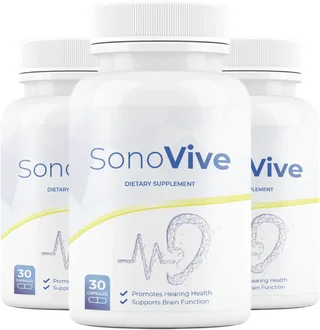
Check your medicines, then decide30 capsules a bottle · $69 for one bottle · 60-day refund window
Order nowA real-life choice
What would a sensible first step look like?
Picture a 72-year-old retired teacher. She keeps asking her grandchildren to repeat themselves, and she has a faint hiss at night. Her son sees a SonoVive ad and offers to order a bottle.
A better order of events: a hearing test first. If it shows mild to moderate loss, an OTC hearing aid is a fair next step, and she may hear the grandchildren the same week. If she still wants to try SonoVive, she checks her medicine list with a pharmacist, because of St. John's wort.
That way she spends money on the thing with proof first, and adds the supplement only if it is safe for her. Who it may suit: who SonoVive is for.
Both at once
Can you use SonoVive and hearing aids together?
Yes. A capsule has no effect on how a hearing aid works. The checks that matter are about your body, not the device: your medicines, pregnancy, and any planned surgery. See SonoVive side effects before you start.
Fair to both
Where does each option have the edge?
Where SonoVive is easier
- Low upfront cost: $69 for one bottle
- No fitting, no device to wear
- 60-day refund on opened or empty bottles
- Free U.S. shipping
Where hearing aids are stronger
- Proven help for age-related hearing loss
- A listed help for tinnitus
- No drug interactions
- You can tell quickly if they help
More on protecting your ears: the hearing health guide.
FAQ
SonoVive vs hearing aids FAQ
Can SonoVive replace hearing aids?
No. Hearing aids amplify sound and are the proven treatment for age-related hearing loss. SonoVive is a supplement with no published study, and its bottle claims only to promote hearing health. Do not delay a hearing test or hearing aid to try a capsule.
Is SonoVive cheaper than hearing aids?
Upfront, yes: one bottle is $69 in the sales-page text. But the cost repeats each month, about $2.30 a day, and no study shows it improves hearing. A hearing aid costs more at first but has proven benefit.
Do hearing aids help tinnitus?
They can. NIDCD lists hearing aids, sound therapy and counseling as ways to reduce tinnitus symptoms, especially when hearing loss is also present. No supplement, including SonoVive, has been proven to help ringing.
Can I take SonoVive while wearing hearing aids?
Yes, the capsule does not affect the device. What matters is your medicines. SonoVive names St. John's wort, which can weaken birth control, blood thinners and many other drugs, so ask a pharmacist first.
Do I need a prescription for hearing aids?
Not always. Adults 18 and older with perceived mild to moderate hearing loss can buy OTC hearing aids. FDA advises a doctor visit first for one-sided loss, recent change, ear pain, vertigo, or fluid from the ear.
What should I try first for hearing loss, a supplement or a hearing test?
A hearing test. It shows the type and degree of loss and rules out problems that need a doctor. About one in three Americans aged 65 to 74 has hearing loss, and hearing aids are the main treatment.
Who wrote this
Written and reviewed by
Plain-language pages built from the bottle images, the vendor's sales and help pages and linked public health sources such as NIH, FDA and Cochrane.
Last updated . Read our editorial standards and how we check reviews. This website is run by Sonovives, a USA authorized SonoVive retailer, not by the manufacturer. We earn money when you buy through our order links.
Keep reading
More about SonoVive
Hearing health guide
Warning signs, hearing tests, hearing aids and tinnitus helps, in plain words, before you weigh SonoVive.
Read more
Who it's for
A quick fit check for SonoVive: who might try it, who should ask first, and who should not take it.
Read moreBenefits
Every SonoVive claim set beside the research on its ingredients, with the fair points and the weak ones.
Read moreUSA Authorized SonoVive Retailer
Thinking about SonoVive?
Book a hearing test, check your medicines with a pharmacist, then pick a pack. Keep your order email: it is the key to any refund.
- Secure checkout
- 60-day money-back window
- Tracking in the order email