How it works
How Does SonoVive Work? The Ingredients One by One
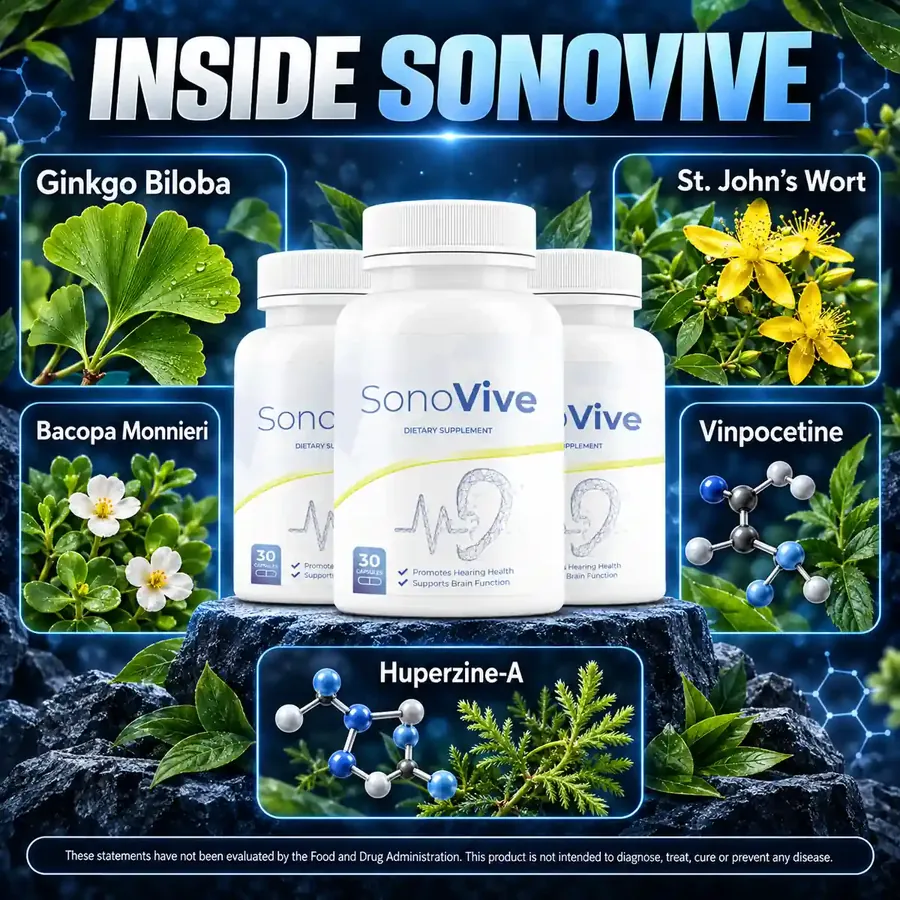
SonoVive is a blend of five named plant ingredients and compounds.
Each one has been studied alone for mood, memory or blood flow. Ginkgo is the one tested for ringing in the ears (Cochrane: Ginkgo for tinnitus 2022).
Written by the SonoVive editorial teamUpdated
The short answer
How is SonoVive supposed to work?
The seller never says. The sales page promises to support the health of your ears and lists ingredients, but it gives no step-by-step reason why the blend should change hearing.
So the fair way to answer is ingredient by ingredient. Each one has a known action in the body, worked out in studies of that ingredient alone. None of those studies used SonoVive. None used this exact mix.
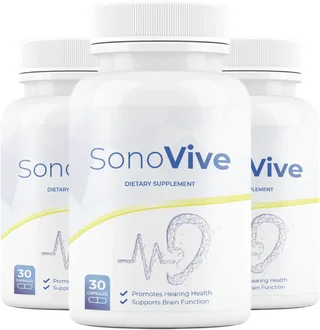
The bottle front reads Promotes Hearing Health and Supports Brain Function. Those are structure/function claims. U.S. rules let a supplement use that kind of wording as long as it also prints that the product is not meant to diagnose, treat or prevent disease (21 CFR 101.93).
Ingredient by ingredient
What does each SonoVive ingredient do in the body?
The brand names five. Each one's main action, as NIH, FDA and research groups describe it.
| Ingredient | What it is known for | Tested for hearing? |
|---|---|---|
| Ginkgo biloba | A tree-leaf extract sold for memory and blood flow | Yes, for tinnitus. Benefit uncertain in 12 studies (Cochrane: Ginkgo for tinnitus 2022) |
| St. John's wort | A flowering herb studied for mild to moderate depression (Apaydin 2016 SJW review) | No |
| Bacopa monnieri | An herb from Ayurvedic medicine, studied for memory recall (Pase 2012 bacopa review) | No |
| Vinpocetine | A compound first developed as a drug in Europe, sold for blood flow to the brain (MSKCC vinpocetine) | No |
| Huperzine A | A club-moss alkaloid that slows the breakdown of acetylcholine, a memory messenger, much like some dementia drugs (ADDF huperzine A) | No |
Notice the pattern. Four of the five are memory or mood ingredients. Only one was ever put to a hearing test.
Strongest to weakest
How strong is the evidence behind each part?
- Hearing aidsThe proven help for age-related loss
Hearing aids, including over-the-counter aids for adults with mild to moderate loss, are the standard treatment. (FDA OTC hearing aids)
- BacopaMemory trials, 12 weeks
Some gains in memory recall at 300-450 mg a day. Never tested for hearing. (Pase 2012 bacopa review)
- Huperzine A20 Alzheimer's trials
Some score gains, but poor study quality. Never tested for hearing. (Yang 2013 huperzine meta-analysis)
- GinkgoCochrane 2022: 12 tinnitus studies
Uncertain benefit; it may make little or no difference to how bad ringing feels. (Cochrane: Ginkgo for tinnitus 2022)
- VinpocetineCochrane: 3 dementia studies
Inconclusive, and FDA warns against it in pregnancy. (Cochrane vinpocetine)
- SonoViveNo study of the product
No trial of SonoVive for hearing, ringing or memory has been published. (FTC health products guidance)
Bar length shows how directly each line of evidence answers the question: will this help my hearing? It is our editorial summary of the linked sources, not a score from any study.
The ladder starts with hearing aids on purpose. They are the yardstick.
Ringing in the ears
Can SonoVive work on tinnitus?
No study shows it. NIDCD says there is not yet a cure for tinnitus, and that no vitamin, herb or supplement sold for it has been shown to work (NIDCD tinnitus).
Ginkgo is the closest thing to a test. Cochrane pooled 12 studies with 1,915 people in 2022. The reviewers could not tell whether ginkgo helped, and said it may make little or no difference to how bad the ringing feels (Cochrane: Ginkgo for tinnitus 2022). An earlier Cochrane review of 4 trials and 1,543 people reached a similar view (Cochrane: Ginkgo for tinnitus (Hilton)).
What does help many people: sound therapy, hearing aids and counseling such as CBT (NIDCD tinnitus). Read more in our guide to what actually helps tinnitus.
Dose matters
Is there enough of each ingredient to work?
Nobody outside the company knows the real amounts. Sponsored articles print figures; the bars put them next to research doses.
Reported amounts come from sponsored articles and are not confirmed by the vendor; study doses are from the GEM trial (GEM trial (DeKosky 2008)) and bacopa trials (Pase 2012 bacopa review). Hearing figures are from NIDCD: about one in three people aged 65 to 74 and nearly half of those over 75 have hearing loss (NIDCD age-related hearing loss).
In research, dose decides a lot. Bacopa trials mostly used about 300 mg a day and often needed 12 weeks (ADDF bacopa 2024). The GEM ginkgo trial used 240 mg a day (GEM trial (DeKosky 2008)). If the sponsored numbers are right, a SonoVive capsule holds a fraction of both. If they are wrong, the true amounts are still a blank, because the vendor shows no Supplement Facts panel.
Check your medicines, then decide30 capsules a bottle · $69 for one bottle · 60-day refund window
Order nowMixing ingredients
Do the ingredients work better together?
There is no evidence either way for this blend. Combining herbs can add effects, cancel them or create new side effects. Only a study of the mix itself can tell, and none has been published.
What mixing does change is safety. Ginkgo and vinpocetine can each nudge bleeding risk (MSKCC ginkgo) (MSKCC vinpocetine). Huperzine A and bacopa can each touch the same brain chemical as dementia medicines (ADDF huperzine A) (ADDF bacopa 2024). Stacked together, small effects can add up.
The part that does work
Which ingredient has the strongest effect on your medicines?
St. John's wort. It is reportedly the largest ingredient, and its best-known action is not on hearing at all. It speeds up how the body clears many medicines.
St. John's wort can weaken birth control pills, warfarin, cyclosporine, some statins and antidepressants such as amitriptyline and bupropion. With drugs that raise serotonin it can cause serious side effects (NCCIH St. John's wort).
Picture a 72-year-old on a statin who buys SonoVive for his ringing. It could change how his statin behaves. Bring the bottle to the pharmacy counter before the first dose. Full list on the SonoVive side effects page.
What would settle it
What kind of study would show SonoVive works?
A randomized trial of the capsule itself. The FTC says health claims generally need randomized, controlled human testing (FTC health products guidance). For a hearing claim, that means people with measured hearing loss or tinnitus, split by chance into SonoVive and look-alike groups, then tested again weeks later.
Real people
Adults with hearing loss or ringing confirmed by a hearing test, not a survey.
A fair comparison
A placebo capsule that looks the same, with neither side knowing who got what.
Measured results
Hearing tests and tinnitus scores before and after, published where anyone can read them.
No such study of SonoVive appears on the sales page, or in its 28 references, and we found none published elsewhere.
Bottom line
So what is SonoVive really doing?
Best guess from the evidence: SonoVive delivers small, unconfirmed amounts of five well-studied ingredients, mostly aimed at mood and memory. Its effect on hearing has never been measured.
That does not make it useless for everyone. It does mean the order of steps matters. Get a hearing test. Ask your pharmacist about St. John's wort. Then decide with clear eyes, and keep inside the 60-day refund window if you try it.
FAQ
How SonoVive works: common questions
How does SonoVive work for hearing?
Nobody has shown that it does. The vendor gives no explanation of how the blend should affect the ear, and no study of SonoVive exists. Its five named ingredients were studied alone, mostly for memory or mood. Only ginkgo was tested for tinnitus, and Cochrane reviewers found the benefit uncertain.
What is the main ingredient in SonoVive?
The vendor does not publish amounts, so the main ingredient is not confirmed. Two sponsored articles list St. John's wort first, at 250 mg per capsule. That matters for safety, because St. John's wort weakens many common medicines, including birth control pills, warfarin and some antidepressants.
Does ginkgo help ringing in the ears?
Probably not much. A 2022 Cochrane review of 12 studies and 1,915 people found uncertain benefit and said ginkgo may make little or no difference to tinnitus severity. NCCIH also says research does not support ginkgo for tinnitus. Sound therapy and hearing aids have better support.
Is SonoVive a brain supplement or a hearing supplement?
The bottle claims both: Promotes Hearing Health and Supports Brain Function. Looking at the ingredients, four of the five named ones were studied for memory or mood rather than hearing. So the formula leans toward the brain claim, though no test of SonoVive supports either one.
How long does it take SonoVive ingredients to act?
It depends on the ingredient, and none was timed in SonoVive. Bacopa trials often ran 12 weeks before memory changes showed. Huperzine A trials lasted 8 to 36 weeks. A 30-day bottle is shorter than most of those studies, so judge carefully and watch the refund date.
Is there a clinical trial on SonoVive?
No. We found no published trial of SonoVive for hearing, ringing or memory. The sales page lists 28 reference links, and none tests the product. The FTC says health claims generally need randomized human trials, which is the kind of evidence missing here.
Why does SonoVive contain vinpocetine?
The vendor does not say why. Vinpocetine is usually sold for blood flow to the brain. Dementia trials used 5 to 60 mg a day with inconclusive results. FDA warns against it for anyone pregnant or who could become pregnant, and says it does not meet the definition of a dietary ingredient.
Who wrote this
Written and reviewed by
Plain-language pages built from the bottle images, the vendor's sales and help pages and linked public health sources such as NIH, FDA and Cochrane.
Last updated . Read our editorial standards and how we check reviews. This website is run by Sonovives, a USA authorized SonoVive retailer, not by the manufacturer. We earn money when you buy through our order links.
Keep reading
More about SonoVive
Ingredients
All five named SonoVive ingredients, the reported amounts, what studies used and which medicines they clash with.
Read more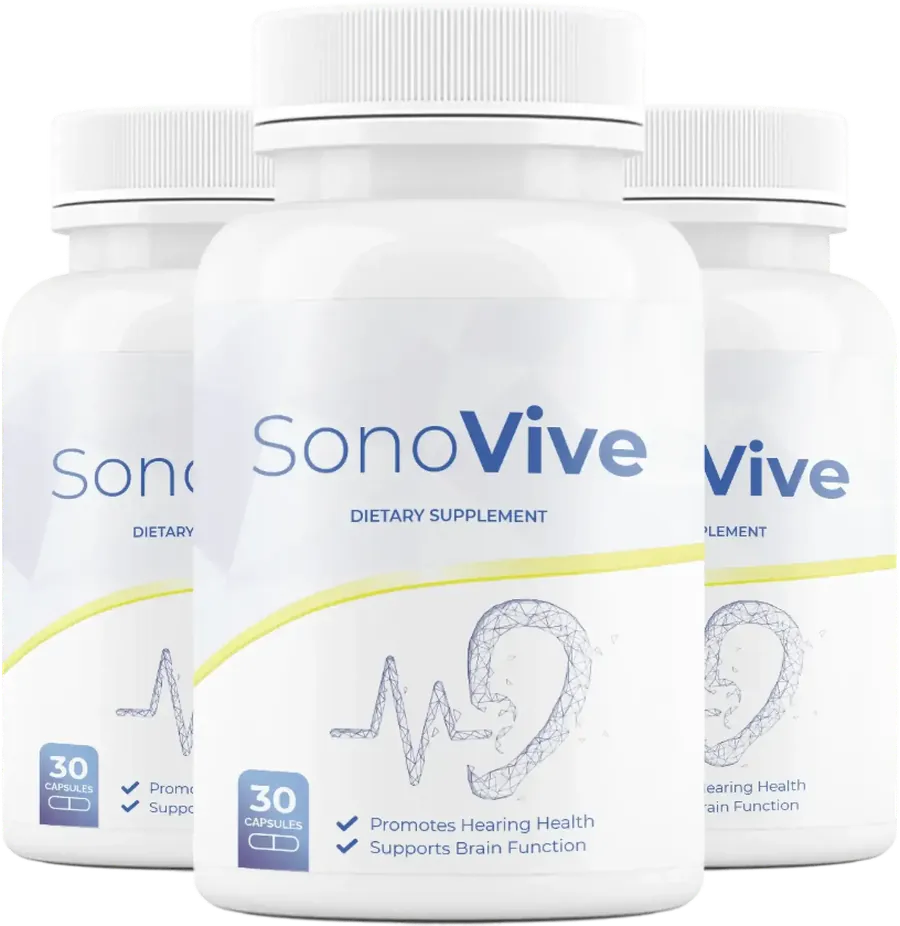
Label & facts
The SonoVive label typed out word for word, with every missing amount, warning and direction marked plainly.
Read moreSonoVive vs hearing aids
A fair side-by-side of SonoVive capsules and hearing aids: evidence, cost, safety, tinnitus and who each suits.
Read moreUSA Authorized SonoVive Retailer
Thinking about SonoVive?
Book a hearing test, check your medicines with a pharmacist, then pick a pack. Keep your order email: it is the key to any refund.
- Secure checkout
- 60-day money-back window
- Tracking in the order email