Blog · Hearing health
How to Protect Your Hearing: Everyday Habits That Matter After 50
Protect your hearing by wearing earplugs or earmuffs around loud tools and engines, keeping TV and earbud volume down, giving your ears quiet breaks, and getting a hearing test when you notice a change. About one in three Americans aged 65 to 74 has hearing loss (NIDCD age-related hearing loss). No supplement, SonoVive included, replaces these steps.
Written by the SonoVive editorial teamUpdated · 8 min read
The plain answer
Can you protect your hearing as you get older?
Partly, yes. You cannot stop your ears from aging, but you can limit loud noise and catch loss early.
Hearing loss is common later in life. About one in three people in the U.S. aged 65 to 74 has it, and nearly half of those older than 75 have trouble hearing (NIDCD age-related hearing loss). Much of that is age. Noise is the part you can control day to day.
Think of Ray, 58, who mows every Saturday and runs a leaf blower each fall. He never wore ear protection because the noise did not hurt. Starting now costs him almost nothing.
Daily habits
What everyday habits protect your hearing?
The best habits are cheap and quick. Pick two or three and make them automatic.
Plug up for engines
Wear earplugs or earmuffs for mowers, blowers and power tools. Keep a pair where the tools live.
Turn it down
Lower the TV and earbuds a notch. If others can hear your earbuds, they are too loud.
Step back
At concerts, parties and games, stand away from the speakers. Distance cuts the blast.
Take quiet breaks
After a loud event, give your ears a calm hour or two. Skip the loud car radio home.
Use captions
Turn on TV captions instead of raising the volume. It saves both ears and arguments.
A sample day
What does an ear-friendly day look like?
The dial plays out one day. A quiet break and a soft sound at night are part of it.
- With breakfast, about 8:00
A meal you never skip makes one capsule a day easy to remember. Follow the amount on your bottle.
- Or with dinner
If mornings are rushed, dinner works too. The vendor gives no time of day.
- A quiet break
Give your ears a rest from loud TV, tools and traffic. Wear earplugs for mowing or power tools.
- Sleep with soft sound
Ringing often feels louder in a silent room. A fan or quiet sound machine is a simple form of sound therapy.
Timing is a suggestion; follow your bottle. Sound therapy, hearing aids and counseling are the tinnitus helps NIDCD lists (NIDCD tinnitus).
The capsule times apply only if you choose SonoVive; follow your bottle. For ringing, NIDCD lists sound therapy, hearing aids and counseling as the real helps (NIDCD tinnitus). More in what actually helps tinnitus.
Know the noise
Which everyday sounds call for ear protection?
A simple rule of thumb: if you must shout to be heard by someone an arm's length away, it is loud enough to protect your ears.
| Situation | Simple step |
|---|---|
| Lawn mower, leaf blower, trimmer | Earplugs or earmuffs every time |
| Drills, saws, sanders in the garage | Earmuffs; keep a pair on the workbench |
| Concerts, weddings, sports arenas | Foam earplugs; stand away from speakers |
| Earbuds on a walk or flight | Lower volume; noise-cancelling buds let you keep it lower |
| Motorcycle or open-cab tractor | Earplugs under the helmet or cap |
| Shooting range or hunting | Earplugs plus earmuffs |
Catch it early
When should you get a hearing test?
Get one when you notice a change, and ask your doctor about a baseline test if you are over 50. Family often notices first. Maybe they say the TV is too loud, or that you miss parts of a talk at dinner.
Take Joan, 72. Her son plans to buy her a hearing supplement. A better first gift is a ride to a hearing test.
See a doctor rather than a store if hearing changed in the past 6 months, if loss or ringing is in one ear only, or with vertigo, ear pain, or fluid or blood from the ear (FDA OTC hearing aids).
By the numbers
How common is hearing loss, and who can buy hearing aids?
Sources: NIDCD (NIDCD age-related hearing loss) and FDA (FDA OTC hearing aids).
Check your medicines, then decide30 capsules a bottle · $69 for one bottle · 60-day refund window
Order nowTreatment
When are hearing aids the right step?
When a test shows loss that makes daily life harder. Hearing aids are the main treatment for age-related hearing loss, along with cochlear implants for more severe cases (NIDCD age-related hearing loss). Adults 18 and older with perceived mild to moderate loss can buy over-the-counter aids without a prescription (FDA OTC hearing aids).
Our SonoVive vs hearing aids comparison sets the two side by side.
Supplements
Can a supplement protect your hearing?
No supplement has been shown to protect hearing or quiet ringing. NIDCD says vitamins, herbs and supplements are advertised for tinnitus but none has been proven effective (NIDCD tinnitus). SonoVive itself has never been studied.
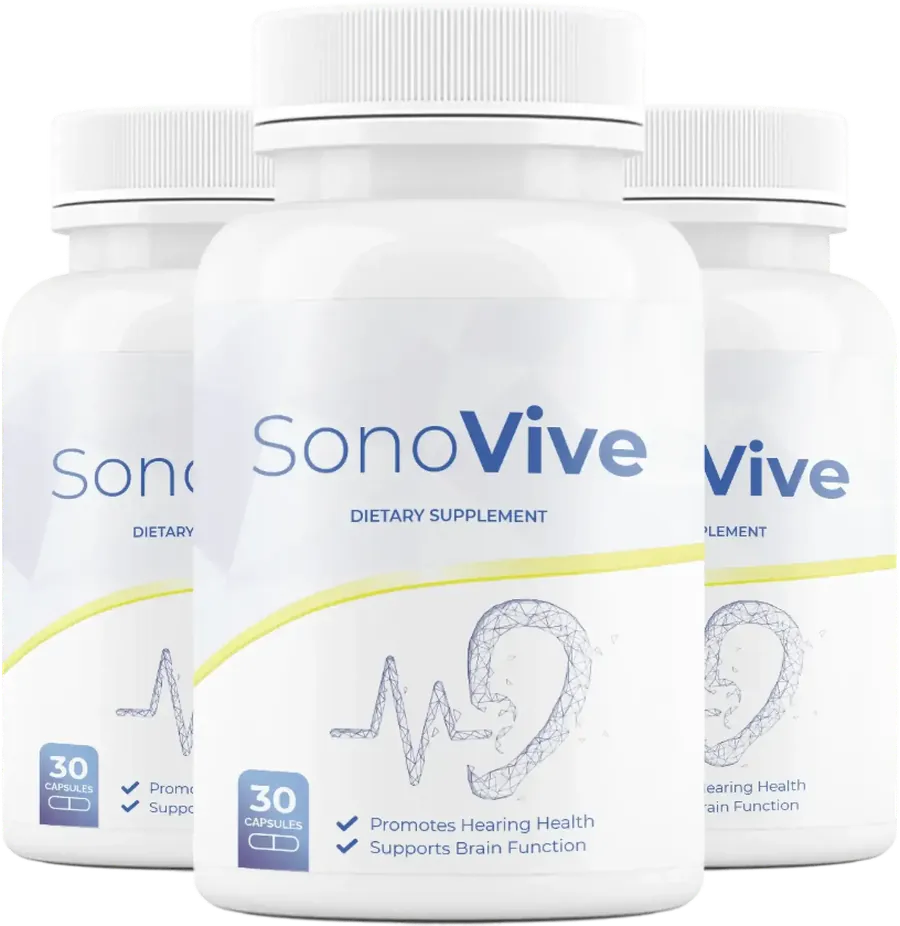
The SonoVive bottle says "Promotes Hearing Health," yet most of its named ingredients were studied for mood and memory, not hearing.
Keep the earplugs and the hearing test. Treat a supplement as an extra, never a swap. Our guide to choosing a hearing supplement lists what to check on the label.
Red flag
What hearing change needs a doctor today?
That is sudden hearing loss, a medical emergency. NIDCD says treatment delayed more than two to four weeks is less likely to help (NIDCD sudden deafness). Read why sudden hearing loss is an emergency.
Sources
Where do these hearing facts come from?
- Age-Related Hearing Loss (Presbycusis). National Institute on Deafness and Other Communication Disorders (NIH), current.About one in three people in the U.S. aged 65 to 74 has hearing loss and nearly half of those older than 75 have difficulty hearing. Treatments: hearing aids (OTC since 2022 for mild to moderate loss), cochlear implants, assistive listening devices.
- OTC Hearing Aids: What You Should Know. U.S. Food and Drug Administration, 2023.OTC hearing aids are for people 18 and older with perceived mild to moderate hearing loss. See a doctor (preferably an ENT) for hearing change in the past 6 months, vertigo, ear fluid or blood, ear pain, or hearing loss or ringing in only one ear.
- Tinnitus. National Institute on Deafness and Other Communication Disorders (NIH), current."Currently, there is no cure for tinnitus, but there are ways to reduce symptoms." Vitamins, herbal extracts and supplements are advertised as cures but none has been proven effective. First see your primary care doctor; sound therapy, hearing aids and counseling help.
- Sudden Deafness. National Institute on Deafness and Other Communication Disorders (NIH), current.Consider sudden deafness "a medical emergency and visit a doctor immediately." "Treatment that is delayed for more than two to four weeks is less likely to reverse or reduce permanent hearing loss."
FAQ
Protecting your hearing: common questions
How can I protect my hearing from further damage?
Wear earplugs or earmuffs around loud engines and tools, keep TV and earbud volume down, and give your ears quiet breaks after loud events. Get a hearing test when you notice a change, and see a doctor the same day if hearing drops suddenly.
Do earplugs really protect your hearing?
Earplugs and earmuffs are a simple, low-cost way to cut how much loud noise reaches your ears. Use them every time you mow, run power tools, ride a motorcycle or go to a loud concert.
Can vitamins or supplements protect hearing?
No supplement has been shown to protect hearing. NIDCD says vitamins, herbs and supplements are advertised for tinnitus, but none has been proven effective. SonoVive has never been studied. Noise habits, hearing tests and hearing aids are the steps with support.
At what age should you get a hearing test?
Get one whenever you notice a change, and ask your doctor about a baseline test after 50. About one in three Americans aged 65 to 74 has hearing loss. See a doctor first if the change happened in the past 6 months or affects one ear only.
Can you buy hearing aids without a prescription?
Yes, if you are 18 or older with perceived mild to moderate hearing loss. FDA allows over-the-counter hearing aids for that group. See a doctor first for recent hearing change, loss or ringing in one ear, vertigo, ear pain, or fluid or blood from the ear.
Does SonoVive protect your hearing?
No study shows that. The bottle says Promotes Hearing Health, but SonoVive itself has never been tested, and its named ingredients were studied mostly for memory and mood. It also names St. John's wort, which can interact with many medicines. Protect your ears with noise habits first.
Who wrote this
Written and reviewed by
Plain-language pages built from the bottle images, the vendor's sales and help pages and linked public health sources such as NIH, FDA and Cochrane.
Last updated . Read our editorial standards and how we check reviews. This website is run by Sonovives, a USA authorized SonoVive retailer, not by the manufacturer. We earn money when you buy through our order links.
Keep reading
More about SonoVive
Hearing health guide
Warning signs, hearing tests, hearing aids and tinnitus helps, in plain words, before you weigh SonoVive.
Read more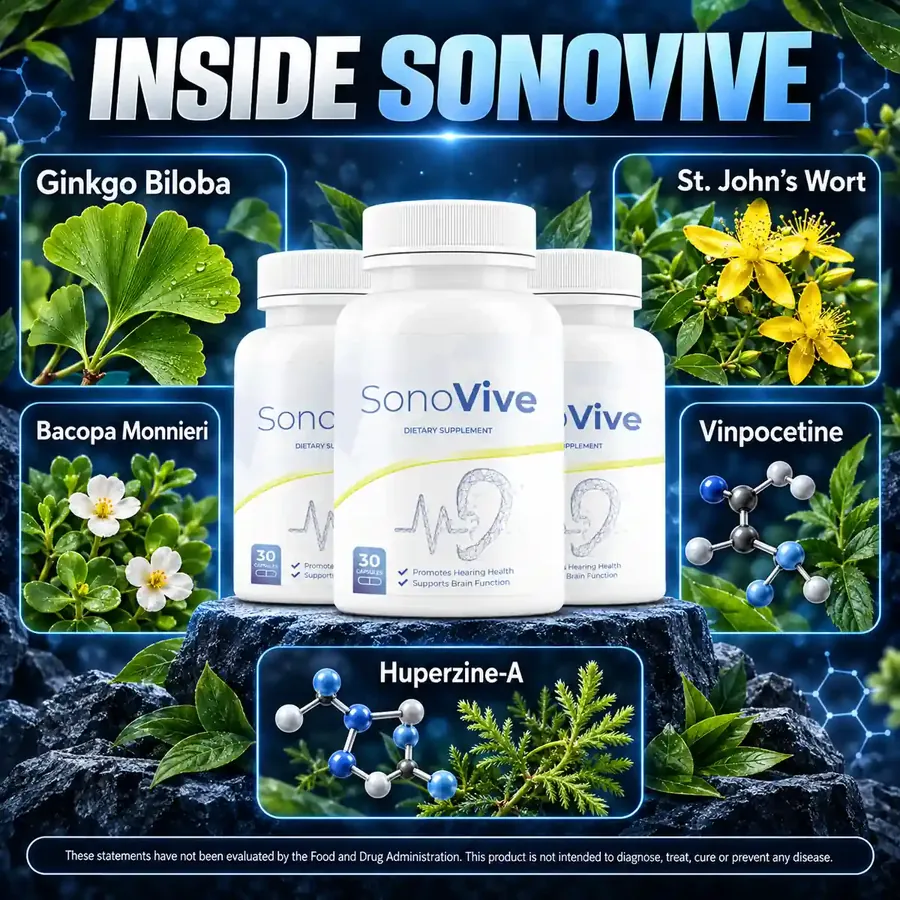
Choosing a hearing supplement
Seven checks for any hearing capsule, with a plain scorecard of where SonoVive passes and where it falls short.
Read more
Sudden hearing loss
Hearing that drops over hours or days needs a doctor the same day. The signs, the timing and the first steps.
Read moreUSA Authorized SonoVive Retailer
Thinking about SonoVive?
Book a hearing test, check your medicines with a pharmacist, then pick a pack. Keep your order email: it is the key to any refund.
- Secure checkout
- 60-day money-back window
- Tracking in the order email